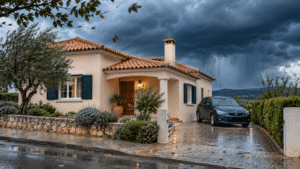
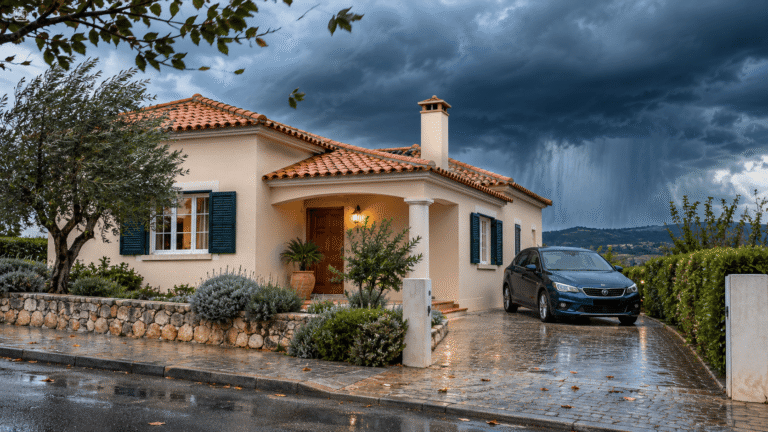

Storms Charles and Bruna are bringing a period of unsettled weather to Portugal. With heavy rain, strong winds and the risk of flooding, protecting people comes first. Safe, practical precautions can also help reduce damage to homes, cars and businesses.
In this guide, C1 Broker Portugal explains how to prepare, where to find official weather warnings and what to do if you need to report storm-related damage to your insurer.

- Check official warnings from IPMA and Civil Protection. Conditions can change quickly and the level of risk differs by area.
- Prepare your home without taking unnecessary risks. Secure loose outdoor items and check drainage only when safe.
- Avoid driving or parking in flood-prone areas. Never attempt to cross a flooded road.
- Call 112 in an immediate emergency. Reporting an insurance claim comes after everyone is safe.
- If damage occurs, document it and report it in writing. Cover depends on the policy you have actually purchased.
1. Storms Charles and Bruna: follow official weather warnings
The Portuguese Institute for Sea and Atmosphere (IPMA) has identified Charles and Bruna as two separate low-pressure systems affecting the weather in Portugal during this period. Their strength, movement and regional effects may change as forecasts are updated.
This article was prepared on 11 November 2026. Before travelling, driving or working outdoors, rely on the most recent official warnings, rather than an older forecast or social media post.
Check IPMA weather warnings | Check Civil Protection public notices
Follow the authorities’ advice, especially in areas exposed to flooding, falling trees, landslides or rough seas. Keep away from swollen watercourses, unstable cliffs and exposed coastal areas.
2. How to protect your home before severe weather arrives
A few preventive measures can limit damage from heavy rainfall and strong gusts of wind. Complete them before conditions deteriorate, and only when it is safe to do so.
Balconies, gardens and terraces
- Bring in or secure garden furniture, flowerpots, parasols and loose objects.
- Retract awnings and secure movable outdoor structures.
- Remove items that could be carried away by the wind.
Doors, windows and equipment
- Make sure doors and windows are properly closed.
- Move documents and vulnerable electrical equipment away from possible water ingress.
- In flood-prone areas, prepare suitable barriers in advance.

3. How to protect your car from heavy rain and strong winds
Cars can be damaged even while parked. Choosing a safe parking place and postponing an unnecessary journey can make a real difference.
Where to park
Choose higher, sheltered ground where possible. Avoid trees, unstable structures, flood-prone underground garages and low-lying areas.
Before driving
Check weather warnings, reduce your speed and avoid non-essential journeys during the worst rain and wind.
Flooded roads
Never drive through floodwater. You may not be able to judge the depth, current or condition of the road surface.

If your vehicle becomes stranded in a flooded area, do not attempt to retrieve it while conditions remain dangerous. Follow the authorities’ instructions and arrange assistance when it is safe.
4. Prepare for possible power and communications outages
Some simple preparations will help if electricity, water or mobile network services are interrupted.
Stay connected
Charge mobile phones and power banks. Keep emergency contacts readily accessible.
Lighting
Have battery-powered torches and spare batteries available. Avoid candles because of the fire risk.
Essentials
Keep drinking water, food that does not need cooking and any regular medication to hand.
5. In an emergency in Portugal, call 112
112
Free of charge · 24 hours a day · 7 days a week
Call 112 if someone is in immediate danger, there are injuries, a fire, dangerous flooding or another situation requiring urgent rescue. The emergency service will direct the call to the appropriate responders.
Never put yourself at risk to save property, take photographs or begin repairs.
For non-emergency situations, contact your local Civil Protection service, fire brigade or other relevant local authority, following official guidance.
6. What should you do if a storm causes damage?
If your home, business or vehicle is damaged, wait until you are safe. Then gather the available information and notify your insurer without unnecessary delay.
Keep away from hazards and request urgent assistance if necessary.
Take photographs and write down what happened, but only when safe.
Take reasonable temporary protective steps and keep evidence and receipts.
Use the relevant claim form and keep a copy.
Provide any additional documents requested by the insurer.
Not necessarily. Article 100 of Portugal’s Insurance Contract Law establishes the period stated in the policy or, if no contractual period is specified, eight days immediately following awareness of the claim event. Check your policy and report the incident as soon as reasonably possible once it is safe to do so.
Under Article 126, once a claim event occurs, policyholders must use the means available to them to prevent or limit further damage. This does not mean putting yourself in danger or undertaking permanent repairs without coordination.
What evidence should you collect? A description of the event, date and location, photographs taken safely and, where available, repair estimates, invoices and supporting documents. You do not need to wait until every document is ready before making an initial report; outstanding information can be supplied afterwards.
Written, documented notification makes the process easier to track and reduces misunderstandings. If your policy includes emergency assistance, also use the insurer’s designated assistance number.
7. Where can you report storm damage with C1 Broker?
Choose the form that matches the type of damage. C1 Broker can help you organise the information and submit the claim to the relevant insurer.
Property insurance claim
For damage to homes, condominium buildings, business premises or their insured contents.
Car insurance claim
To notify damage to your vehicle related to strong winds, heavy rainfall or other weather events.
8. Does home or car insurance cover damage caused by Charles and Bruna?
It depends on your policy. A severe storm does not automatically make every loss insured. The cause of damage, the cover purchased and the applicable policy terms all matter.
Home insurance
Check whether storm, flood or other natural-peril cover is included, and how these risks are defined.
Car insurance
Check whether you have natural phenomena or other relevant own-damage cover for the vehicle.
Business insurance
Review cover for the building, stock, contents, equipment and any additional sections of your policy.
- Whether the relevant cover is included and how storm or flood is defined.
- Sum insured and policy limits.
- Excesses (deductibles) and exclusions.
- Evidence requirements and the claims reporting procedure.
For more detail on insurance conditions, assessments and claims, read our existing guide: Storm Damage in Portugal: Insurance Cover, Claims and Deadlines.
9. How can C1 Broker help?
A claim may involve documents, policy interpretation, a technical assessment and communication with the insurer. The C1 Broker team can help you:
- Understand your policy’s benefits, limits and exclusions.
- Prepare the claim notification and supporting evidence.
- Forward information to the relevant insurance company.
- Track the claim and clarify requests for further documentation.
The insurance company makes the final decision on whether a loss is covered and whether compensation is payable, under the policy and applicable law.
10. Frequently asked questions
Are Charles and Bruna the same storm?
No. IPMA communications identify Charles and Bruna as separate weather systems. Consult official warnings for the latest local information.
Do I need to report a claim while the storm is still happening?
No one should risk their safety to file paperwork. Check your policy’s reporting deadline and notify the insurer when it is safe. If no contractual deadline is given, Article 100 generally provides eight days immediately following awareness of the claim event.
Can I report damage without photographs or repair quotations?
Yes. You may make an initial report using the information you have and supply further documents if the insurer requests them.
Does home insurance automatically cover flooding?
No. Flood cover must be included in the relevant policy terms. How the water entered the property and any exclusions can affect the outcome.
Does car insurance cover a fallen tree or heavy rain damage?
Possibly, depending on the cover purchased, the circumstances, excess and exclusions. Compulsory motor third-party liability insurance alone does not cover every type of damage to your own car.
Can C1 Broker help me submit a claim in English?
C1 Broker provides English-language claim pages and can guide you in preparing information and following up with the insurer. The final coverage decision remains with the insurance company.
Protect yourself and your family first. Once you are safe, C1 Broker is here to help you organise the next steps.
Telephone: +351 289 392 452
C1 Broker Portugal · Av. Duarte Pacheco 13 R/C, 8135-104 Almancil
Information notice — 11 November 2026. Weather forecasts and warnings change; always check the most recent official updates. This article is for information only and does not replace instructions from the authorities, a full review of your policy or an individual claim assessment. Cover depends on the general, special and particular policy conditions, limits, excesses, exclusions and the insurer’s assessment. The photographs are illustrative and do not depict the actual storms.